Understanding SEO for AI: An Introduction
As artificial intelligence (AI) continues to revolutionize industries, mastering SEO for AI becomes increasingly essential for maintaining a competitive edge. In this rapidly evolving landscape, understanding how AI influences search engine optimization (SEO) is crucial. AI not only impacts how search engines rank content but also how users interact with search results. This dynamic shift necessitates a tailored approach to SEO.
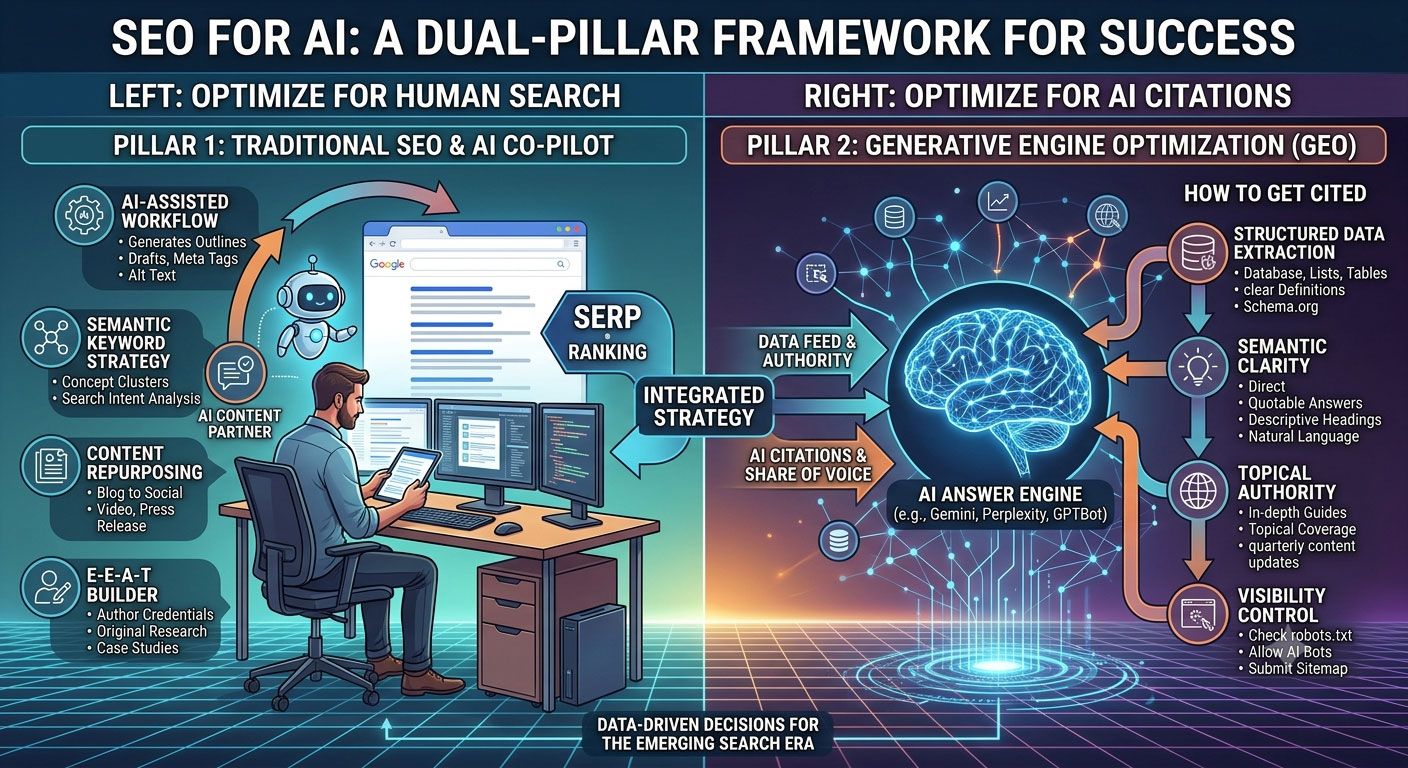
Traditional SEO strategies focus on optimizing content for human readers and search engine algorithms. However, SEO for AI requires a deeper understanding of machine learning, natural language processing, and data-driven decision-making. In this context, SEO practitioners must adapt their techniques to enhance visibility and relevance in an AI-driven world. This involves integrating AI tools and methodologies into existing SEO frameworks.
We need to recognize that AI is not just another tool in the SEO toolkit; it’s a transformative force reshaping how we approach digital marketing. By leveraging AI, we can achieve more precise targeting, improved personalization, and enhanced user experiences. Let’s delve into the intricacies of doing SEO for AI and explore the strategies that can help us succeed.
How do you do SEO for AI?
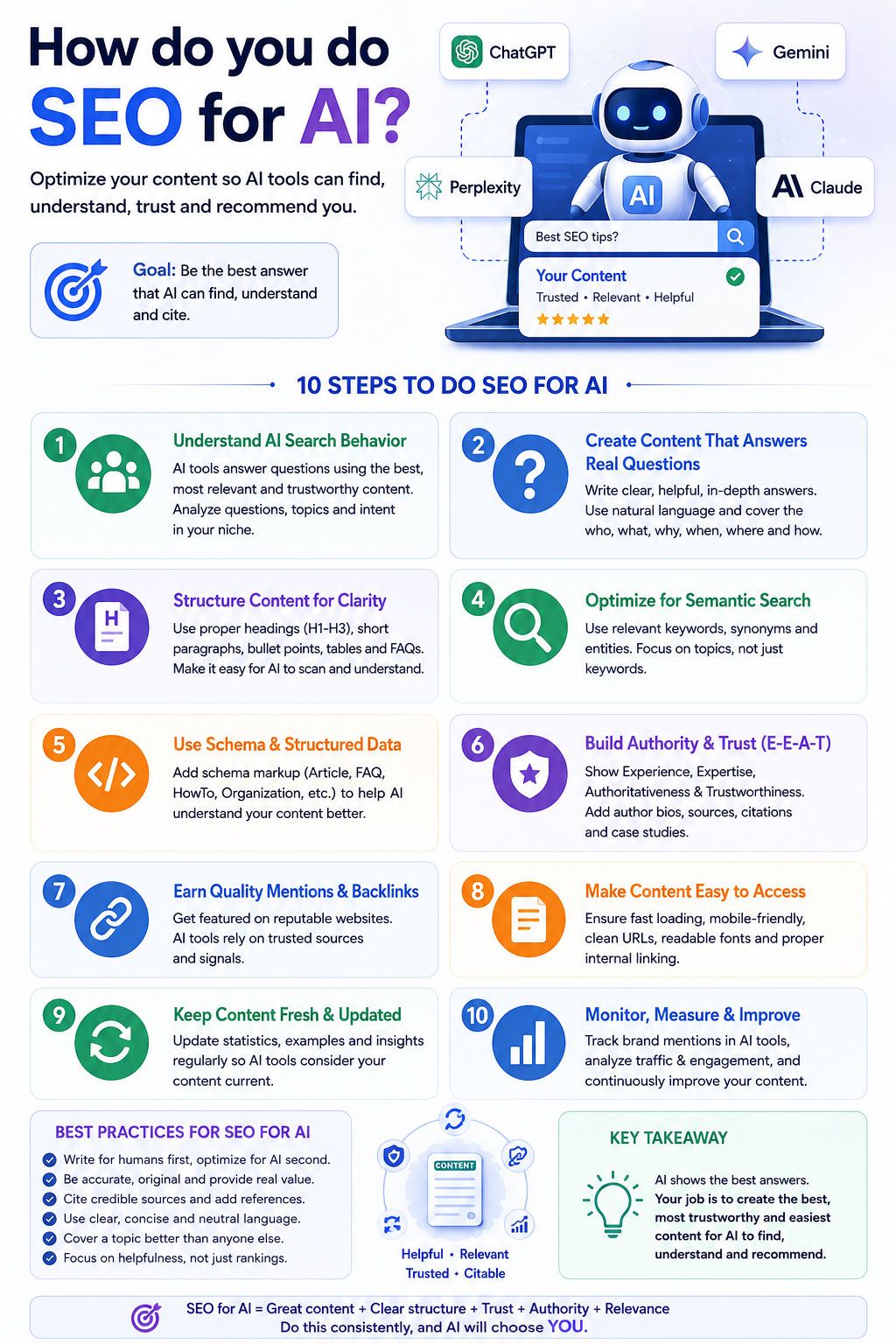
SEO in the AI era requires adapting to how AI systems understand and surface content. Here’s how to approach it:
Optimize for AI Overviews & Answer Engines
- Structure content to directly answer questions clearly and concisely
- Use natural language that matches how people actually ask questions
- Include relevant context and definitions AI can extract
Focus on Semantic Search
- Write comprehensively about topics, not just keywords
- Cover related concepts and entities that AI associates with your main topic
- Use structured data (schema markup) to help AI understand your content’s meaning
Prioritize E-E-A-T (Experience, Expertise, Authoritativeness, Trust)
- Demonstrate real expertise and first-hand experience
- Build author credibility with detailed bios and credentials
- Get quality backlinks from authoritative sources
- Keep content accurate and well-cited
Create Conversational, Natural Content
- Write for how people speak to AI assistants and voice search
- Answer the “why” and “how,” not just the “what”
- Use clear headings that mirror common questions
Technical Foundations
- Ensure fast page speed and mobile optimization
- Maintain clean site architecture and internal linking
- Use descriptive alt text and metadata
Build Topical Authority
- Create content clusters around core topics
- Link related content together strategically
- Go deep rather than broad on your expertise areas
The key shift is that AI rewards content that genuinely helps users and demonstrates expertise, rather than content optimized purely for algorithms.
To effectively implement SEO for AI, we must first understand how AI algorithms analyze and interpret content. Search engines increasingly rely on AI to process vast amounts of data and deliver more relevant search results. This requires a shift from traditional keyword stuffing practices to a more nuanced approach that prioritizes context, relevance, and intent.
Our strategy should begin with a comprehensive analysis of how AI models interpret user intent and context. By focusing on user-centric content, we can align our SEO efforts with AI’s ability to deliver personalized search results. This involves creating content that answers specific user queries and addresses their needs in a meaningful way.
Incorporating AI-driven tools into our SEO strategy is also vital. These tools can help us analyze data patterns, predict keyword trends, and optimize content for better search visibility. By leveraging AI-powered analytics, we can gain valuable insights into user behavior, enabling us to refine our SEO strategies and enhance our overall digital presence.
Keyword Research and Ideas for AI Content
Keyword research for AI content involves understanding how AI interprets and prioritizes search queries. Unlike conventional keyword research, which focuses on individual keywords, AI-driven research emphasizes semantic search and long-tail keywords. By identifying the topics and themes that resonate with our target audience, we can create content that is both relevant and engaging.
To generate keyword ideas, we need to consider the questions and problems our audience faces. Using AI tools, we can analyze search patterns and identify emerging trends. This data-driven approach allows us to craft content that answers specific user queries, thereby improving engagement and driving traffic.
AI content creation isn’t just about using the right keywords; it’s about creating value for the reader. By focusing on quality and relevance, we can ensure that our content meets the needs of our audience and aligns with AI’s criteria for ranking. This involves creating comprehensive, informative, and engaging content that addresses user intent.
Content Creation and Optimization for AI
Creating content for AI requires a blend of creativity and technical expertise. We need to craft content that not only engages readers but also aligns with AI algorithms. This involves structuring content logically, using clear headings, and incorporating multimedia elements to enhance user experience.
When optimizing content for AI, we must consider factors such as readability, engagement, and relevance. AI algorithms evaluate these factors to determine the quality and utility of content. Therefore, it’s crucial to focus on crafting content that is easy to read, informative, and tailored to the needs of our audience.
Furthermore, we should incorporate structured data and schema markup to enhance content visibility. These technical elements help AI understand the context and meaning of our content, improving its chances of ranking higher in search results. By combining creative content strategies with technical optimization, we can achieve a harmonious balance that appeals to both AI and human readers.
Technical SEO and Site Audits for AI Platforms
Technical SEO for AI platforms involves optimizing the backend infrastructure of our website to ensure it meets the requirements of AI-driven search engines. This includes implementing best practices for site speed, mobile responsiveness, and secure connections (HTTPS). An efficient, user-friendly website enhances user experience and improves our search engine rankings.
Conducting regular site audits is essential for identifying and resolving technical issues that may hinder our SEO efforts. These audits help us pinpoint problems such as broken links, duplicate content, and slow-loading pages. By addressing these issues, we can ensure that our website is optimized for both AI algorithms and user engagement.
Moreover, we should focus on creating a seamless user experience across all devices and platforms. AI algorithms prioritize websites that offer intuitive navigation, fast loading times, and high-quality content. By aligning our technical SEO efforts with these priorities, we can enhance our site’s performance and visibility in search results.
Essential Technical Checklists for AI Bots
Optimizing for AI bots requires a detailed technical checklist to ensure our website adheres to AI-specific best practices. This checklist should include:
- Mobile Optimization: Ensure that our website is fully responsive and delivers a seamless experience on mobile devices.
- Site Speed: Optimize images, leverage browser caching, and minimize code to improve loading times.
- Secure Connection: Implement HTTPS to secure data and boost trustworthiness.
- Structured Data: Use schema markup to enhance content understanding by AI algorithms.
- XML Sitemaps: Create and maintain updated sitemaps to facilitate efficient crawling and indexing by AI bots.
By systematically addressing these technical aspects, we can ensure our website is well-equipped to meet the demands of AI-driven search engines. A comprehensive technical checklist not only improves our site’s performance but also enhances its visibility and relevance in search results.
Google AI Optimization: Best Practices
Based on Google’s latest guidance and current best practices, here’s how to optimize for Google’s AI-powered search features:
Core Principles from Google’s Official Guidance
Provide Valuable, Non-Commodity Content
Google emphasizes creating unique, valuable content that goes beyond what’s readily available elsewhere. The focus has shifted from “rank and click” to “be understood, selected, and quoted” by AI systems.
Answer-First Formatting
Direct, Concise Answers
- Place a clear TL;DR or direct answer in the first 2-3 sentences
- Write each page as a standalone answer that AI can extract and reuse as-is
- Structure content around explicit questions (H2/H3) with factual answers immediately following
Technical Implementation
Structured Data is Critical
- Implement schema markup (FAQPage, HowTo, Article schema)
- Pages appearing in AI Overviews typically rank in positions 1-12 and have at least one structured data type implemented
Entity-Rich Content
- Focus on named entities (brands, concepts, standards, locations, people, frameworks, tools) rather than just keywords
- Help Google understand relationships between entities in your content
E-E-A-T Signals
Demonstrate Expertise and Authority
- Include author credentials and demonstrate first-hand experience
- Build topical authority with fewer but much deeper pages (pillar content, glossaries, methodologies)
- Create topical cluster articles that establish domain authority on specific subjects
Content Optimization for Citations
Write for AI Reuse
- Add extractable proof: numbers, lists, steps, small tables
- Use clean, quotable sentences without decorative storytelling
- Write content that AI engines can reuse without rewriting
Specialized Content Types
Google’s guidance specifically mentions optimizing for:
- Local content
- Shopping content
- Image content
- Video content
Key Mindset Shift
The winning approach in 2026 isn’t about publishing the most content, but creating content that AI engines trust enough to cite without modification. Traditional SEO best practices remain foundational, but the goal has evolved from driving clicks to earning citations and recommendations from AI systems.
Optimizing for Google AI involves understanding the unique features and capabilities of Google’s AI algorithms. Google utilizes machine learning models like BERT and RankBrain to process search queries and deliver relevant results. To optimize for these AI advancements, we must focus on creating content that aligns with user intent and context.
We should prioritize quality over quantity when it comes to content creation. Google AI values content that provides valuable insights, addresses user queries, and offers a comprehensive understanding of the subject matter. By focusing on user-centric content, we can improve our chances of ranking higher in Google search results.
Additionally, we need to stay informed about Google’s AI updates and algorithm changes. By staying up-to-date with the latest SEO trends and best practices, we can adapt our strategies to align with Google’s evolving priorities. This proactive approach ensures that our content remains relevant and competitive in an AI-driven search landscape.
Measuring the Success of Your AI SEO Strategy
Measuring the success of an AI SEO strategy involves tracking key performance indicators (KPIs) that reflect the effectiveness of our efforts. These KPIs include organic traffic, search engine rankings, click-through rates, and conversion rates. By analyzing these metrics, we can gain insights into the impact of our SEO initiatives.
We should utilize AI-powered analytics tools to monitor user behavior and engagement. These tools provide valuable data on how users interact with our content, enabling us to refine our strategies and improve user experiences. By leveraging these insights, we can identify areas for improvement and optimize our SEO efforts for better results.
Regularly reviewing and adjusting our SEO strategy is essential for maintaining competitiveness in an AI-driven world. By setting clear goals, analyzing performance data, and making data-driven decisions, we can ensure our SEO efforts continue to deliver value and drive growth.
Common Challenges in SEO for AI and How to Overcome Them
SEO for AI presents unique challenges that require innovative solutions. One common challenge is understanding the complex algorithms and machine learning models used by AI-driven search engines. To overcome this, we must invest in continuous learning and stay informed about the latest AI advancements and trends.
Another challenge is balancing the technical and creative aspects of SEO. While technical optimization is crucial, we must also focus on creating engaging, high-quality content that resonates with our audience. By integrating creativity with technical expertise, we can achieve a balanced approach that satisfies both AI algorithms and user preferences.
Lastly, adapting to the rapid pace of change in the AI landscape can be daunting. To mitigate this challenge, we should foster a culture of agility and adaptability within our SEO strategy. By remaining flexible and responsive to new developments, we can navigate the complexities of SEO for AI effectively and maintain a competitive edge.
FAQs
Q1: How do AI algorithms impact SEO?
AI algorithms enhance search engines’ ability to understand context, relevance, and user intent, leading to more accurate and personalized search results.
Q2: What is the role of machine learning in SEO for AI?
Machine learning enables search engines to analyze vast amounts of data, identify patterns, and deliver relevant content based on user behavior and preferences.
Q3: How can AI tools improve my SEO strategy?
AI tools provide data-driven insights into keyword trends, user behavior, and content performance, helping to optimize SEO strategies for better results.
Q4: Why is structured data important for AI SEO?
Structured data helps AI algorithms understand the context and meaning of content, improving its chances of ranking higher in search results.
Q5: How do I measure the success of my AI SEO efforts?
Track key performance indicators such as organic traffic, search engine rankings, and conversion rates to assess the effectiveness of your SEO strategy.
Conclusion: The Future of SEO in an AI-Driven World
The future of SEO lies in our ability to adapt to the transformative power of AI. As AI continues to reshape the digital marketing landscape, we must innovate and evolve our strategies to stay ahead. By embracing AI-driven tools and methodologies, we can enhance our SEO efforts and achieve sustained growth.
In this AI-driven world, the key to success lies in understanding user intent, creating valuable content, and leveraging data-driven insights. By focusing on these elements, we can ensure our SEO strategies remain relevant and effective in delivering meaningful results.
The journey of mastering SEO for AI is an ongoing process of learning, adaptation, and innovation. By staying informed and proactive, we can navigate the complexities of this evolving landscape and achieve success in the digital age.
Sum Up
Mastering SEO for AI requires a comprehensive understanding of how AI algorithms influence search engine rankings and user behavior. By focusing on user-centric content, technical optimization, and data-driven insights, we can enhance our SEO strategies and remain competitive in an AI-driven world.
If you’re ready to elevate your SEO strategy and unlock the potential of AI-driven optimization, now is the time to act. Embrace the power of AI, stay informed about the latest trends, and continually refine your approach to achieve lasting success in the digital landscape. Ready to take your SEO strategy to the next level? Start integrating AI-driven insights today and watch your digital presence soar. Reach out to our team of experts for personalized guidance and support on your SEO journey!